Photography Starts Before You Take the Shot
- Vanessa Corinna
- 6 days ago
- 8 min read

Your Creativity Isn’t Waiting for You in Lisbon.
At the beginning, you like to believe the problem is somewhere out there.
The city is too boring. The light is wrong. The people aren’t interesting enough. The lens definitely isn’t right, and let’s not even start with the camera. And anyway: if you were standing in Tokyo, Lisbon, or at least in some slightly more photogenic alleyway, then - yes, then - creativity would leap out from behind a crumbling house facade, throw confetti, and scream: “Surprise, you’re an artist now!”
Careful. Spoiler.
It won’t.
Yes, of course, a beautiful place can help. I’m not going to pretend that a rainy parking lot behind a furniture store is the same as a narrow side street in Venice, with fog, warm window light, and an old woman putting down a food bowl for her three-legged cat while somewhere in the background, an accordion is probably crying.
We’re not in a mindset seminar with scented candles and self-deception here.
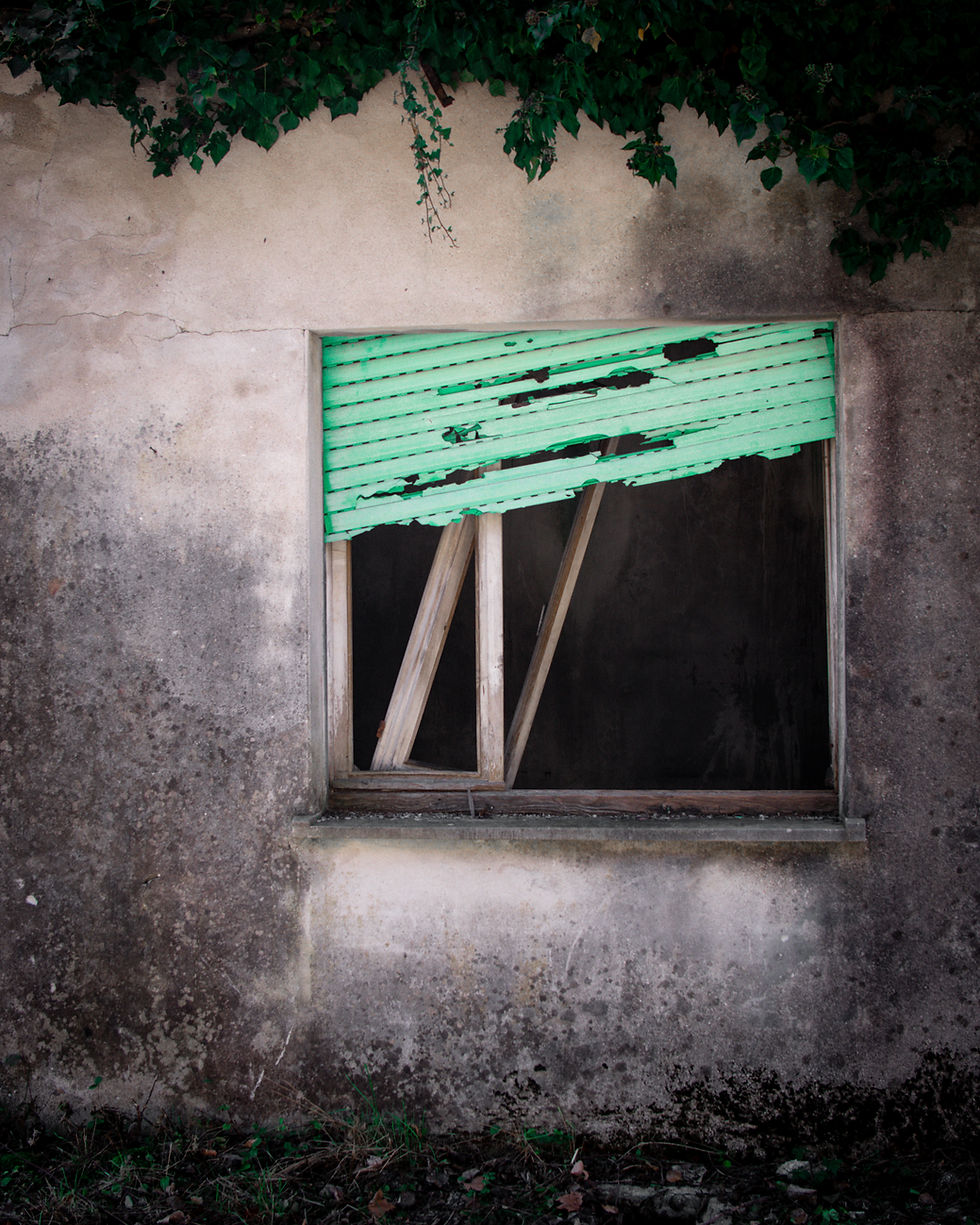
But still, the next photographic step often isn’t about finding more spectacular subjects.
It’s about learning to see images in the first place.
Not things.Images.
And that is a pretty big difference.
Welcome to the “I Took a Picture of a Thing, Therefore It’s a Photo” Phase
I think almost everyone starts like this.
You see a beautiful street and photograph the beautiful street. You see a person and photograph the person. You see a sunset and photograph the sunset, because apparently, somewhere deep in our reptile brain, it has been stored that a sky must be documented immediately as soon as it looks even vaguely like watercolor. Snap. Evidence photo. Otherwise, maybe it was never there.
As if we were violating some law of nature by just standing there and looking at it. Without a camera. Without a story.
And that’s completely okay.
You have to start somewhere. Nobody picks up a camera for the first time and thinks: “Ah yes, this is where I’ll subtly work with visual guidance, negative space, color relationships, and the delicate visual tension between a red coat, a tired neon sign, and my freshly developed sense of urban melancholy.”
Of course not. In the beginning, a street is just a street. And a sunset is a sunset. Unfortunately. Or luckily.
And somewhere along the way, a street stops being just a street.
In the beginning, you mostly photograph what is there.
Later, you start photographing what is happening.
And that’s exactly where it gets interesting.

Because a street isn’t automatically an image. A person isn’t automatically a portrait. A building isn’t automatically architecture. And a sunset is - please hold on for a second - not automatically a good photograph just because the sky looks like someone poured peach syrup over cotton candy.
An image only begins through decisions.
What do I bring into the frame?
What do I leave out, even though it feels briefly wrong?
Where does the light fall?
Where do the lines pull my eye?
Which color is completely ruining the mood right now - and which one is saving everything?
What is happening between two people before they even realize something is happening?
What does a hand say when the face says nothing at all?
And why is that empty corner suddenly more interesting than the actual subject making itself so important in the foreground?
That is photographic seeing.
Not this mystical “artist’s eye” that supposedly gets bestowed upon you under a full moon if you whisper “Leica” three times and then stare meaningfully into a dark alley.
But a trainable way of paying attention.
Seeing photographically doesn’t mean seeing more than other people.
It means staying a little longer where everyone else has already walked past without thinking.
The subject is only the loudest part of the frame.
A subject is often just the loudest part of a photograph.But rarely the only part that matters.

Seeing photographically therefore doesn’t just mean asking: What’s there?
It means asking: What’s happening there?
And yes, I know. At first, that sounds like the kind of sentence someone in a black turtleneck would say over an overpriced almond milk coffee while staring meaningfully out the window and silently repeating their daily mantra: Every reflection is a small confession.
But really, it’s much more practical than that.
Take a person at a bus stop.
That’s not just a person at a bus stop.
That’s a person in the cold morning light, with a yellow ad behind them that is absurdly well-coordinated with their scarf. There’s the line of the bus stop roof leading straight to their face. There’s a hand holding a phone, but their shoulders are really saying: I have not been emotionally available since 6:40 a.m.
That’s an image.
Or a hotel corridor.
First of all: horrifying. Usually red. Always a little too much carpet. And somewhere in there, a whole lot of decisions someone made in 1993 that apparently nobody has questioned since.
But then, at the end of the hallway, a rectangular patch of light falls in through a window. One of the room doors is slightly ajar, and warm light is creeping across the worn red carpet. The edges of the corridor pull your eye toward the back, toward a cleaning cart standing there like a tired spaceship after a very long shift.
And suddenly there’s depth. Repetition. Symmetry. Disruption.
And you think to yourself: okay. Maybe this hallway is alive after all.
Disgusting.
Photographic seeing often begins in exactly these moments. Not where everything is obviously beautiful. Not where a place is already patting itself on the back and screaming photograph me, but where something shifts. Where a place you would normally ignore suddenly develops tension. A direction. A small visual unease.
And that is exactly the moment when a subject becomes an image.
Beauty is nice. Tension does the work.
That was an important realization for me: the strongest photo isn’t always the most beautiful one.
Sometimes it’s not the cleanest image. Not the prettiest. Not the one that politely fits itself into the Instagram square and pretends it has never had any problems.
Sometimes it’s exactly the image that irritates you for a second. The one that doesn’t quite resolve. The one that doesn’t immediately explain everything, but leaves a question open.
A cliffhanger.
A portrait doesn’t always have to show the perfect smile. Sometimes an uncertainty in the hand says more. A quick glance to the side. A moment between two poses. That tiny half-second in which someone hasn’t started “functioning” again yet.
Street photography lives from this anyway.
From gestures. Coincidences. Timing. Directions of gaze. Distances.
From the fact that two things in the frame suddenly have a relationship nobody would have allowed them to have in real life.
A red umbrella in front of a blue wall.
Two people waiting in exactly the same posture.
A pigeon strutting around in front of a luxury store as if it owns at least half the city center.
A dog looking at a man as if it is silently evaluating his entire life choices.
That isn’t necessarily spectacular. But it has tension.
And photographically, tension is often much more interesting than pure beauty.
Beauty says: “Look at me.”
Tension says: “Stay here for a second. There’s something going on.”
And that “there’s something going on” is often the beginning of a good image.
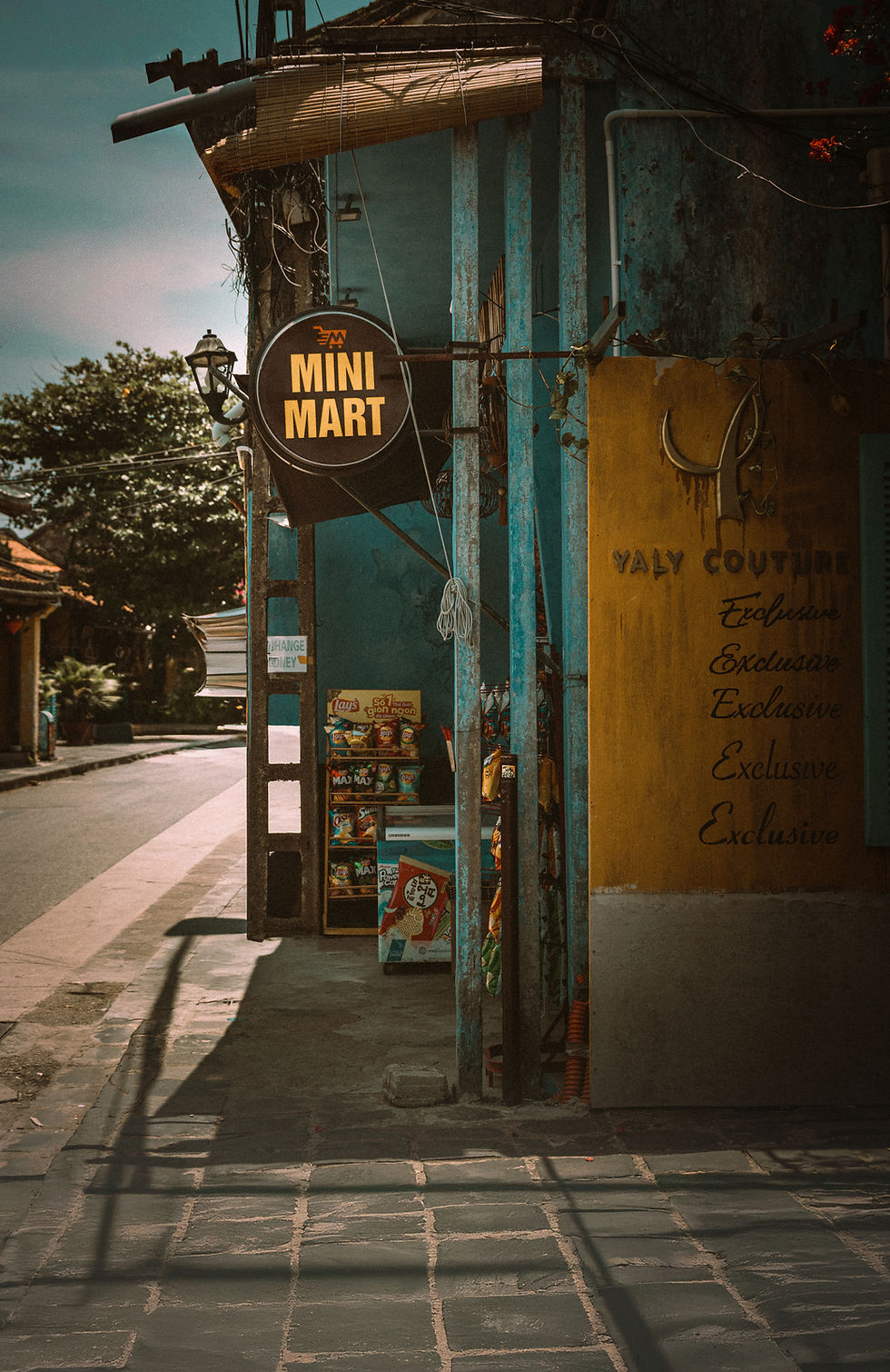
Exercise: Five Minutes of Doing Absolutely Nothing
It’s one of the simplest exercises. And, unfortunately, also one of the most uncomfortable ones, because it goes against everything our small nervous brain loves to do: react, judge, press the button. Do something. Anything. As long as it briefly feels like progress.
Pick a place. Any place.
A street around the corner. Your apartment. A train station. A parking lot. None of it has to look like a film set. Quite the opposite.
And then, at first, you don’t take a photo.
For five minutes. Yes. Five whole minutes.
An eternity when you’re holding a camera and internally you’ve already taken three mediocre photos just to feel productive for a second.
But that’s exactly the point.
During those five minutes, you only observe:
Where does the light fall?
Where does the shadow linger?
Which lines pull your eye through the frame?
Which colors repeat themselves?
What is moving?
What stubbornly stays the same?
Where does a shape appear?
Where does something start to feel disruptive?
And could that disruption maybe be the most interesting thing about the whole scene?
You do nothing.You only collect.
And eventually, this happens:
The place doesn’t change. But your eye does.
You realize that the light on the wall suddenly has more to say than the entire street. That the shadows of your kitchen chairs look like a small graphic drama nobody asked for. That at the train station, the interesting thing isn’t the train, but the different ways people wait.
Impatiently. Tiredly. Upright. Slumped over. With coffee. Without hope. Excited. Tense.
That’s what these five minutes are for - so that “there’s nothing here” slowly turns into “wait a second.”
Why this works
Our brain is efficient. You could also say: lazy, but with a good PR team.
It recognizes things quickly, sorts them into categories, and then wants to move on.
Street. Person. Car. Tree. Dog. Coffee. Danger. Invoice. Ex-boyfriend. Whatever. Next.
Photographically, that can be a problem.
Because if we immediately slip into that mode — subject recognized, photo taken, move on — we stay on the surface. We only react to the obvious.
The obvious isn’t automatically bad. It has just often already been seen by everyone. Several times. From every angle. With a sunset behind it, obviously.
Photographic seeing often only begins after the first impression.
After the quick judgment.
After the inner “there’s nothing here anyway.”
The first look recognizes.
The second one tells.
And that second look can be trained.
By waiting. By repeating. By asking deliberate questions. By enduring that small, uncomfortable moment of not having to capture everything immediately, just because you’re holding a camera and would otherwise get bored.
That sounds almost philosophical now, but it’s actually pretty grounded:
When you look for longer, you don’t necessarily notice more things.
You notice more relationships between things.
Light to face.Line to movement.Color to mood.Distance to tension.Gesture to story.
And suddenly, you’re no longer just photographing a scene.
You’re composing an observation.
Not Seeing More. Seeing Differently.
I think this is the point that should stick:
Taking better photographs doesn’t automatically mean seeing more.
It means seeing differently.
Not faster.
Not more efficiently.
Not wanting to immediately possess everything with your camera just because it looks briefly interesting, but stopping. Noticing. Sorting. Deciding. Maybe waiting. Maybe not taking the obvious photo. Maybe taking the strange one. The quieter one. The one with tension.
Because in the end, a camera is just a tool.
A very beautiful tool, yes. One you can wonderfully lose yourself in technical details over, until suddenly it’s 2:30 a.m. and you’re watching comparison videos about lenses you absolutely do not need.
Hypothetically, of course.
But the actual work begins before that.
In the way you look.
And maybe that’s exactly the good news: you don’t immediately need a better camera. You don’t always need better places. You don’t need to wait until your life looks like an editorial with accidentally perfect window light and people who somehow manage to look like they’re about to end up in a photobook about urban loneliness even while getting coffee.
You can start seeing better exactly where you are.
Even in a parking lot.
Unfortunately.
Or maybe exactly there.
A Tiny Homework Assignment for Your Eye
On your next walk, while traveling, or - very dramatically - in your own stairwell, take the pressure out for a moment. You don’t have to make a good photo immediately.
Stop for a second.
Look at what the light is doing.
Which line is pulling your eye.
Which color is disrupting the scene.
Which gesture almost disappears.
Which place only starts acting a little suspicious on the second look.
And if you find an image in something that looked like “there’s nothing here anyway” before: even better.
Save it. Share it. Or tag me on Instagram, if you like - I love these small visual pieces of evidence that “there’s nothing here anyway” is usually just our eye trying to move on too quickly again.

Comments