10 honest tips for beginner photographers (that actually make a difference)
- Vanessa Corinna
- 6 days ago
- 5 min read

Most of us start the same way.
You see images that somehow hit you, and you think: I want to be able to do that.
So you begin. Camera in hand, YouTube open, Pinterest full of inspiration.
And still, everything feels… flat.
I used to ask myself: Why don’t my images look the way I imagine them?
The honest answer isn’t technique. It’s not the camera. It’s not “talent” either.
It’s that in the beginning, you don’t really see yet.
And that’s exactly what this is about.
1. Sit down for 10 minutes every day, and see!
Without a camera.
It sounds pointless at first, I know. But this changed the most for me.
Sit somewhere- by a window, in a café, in your room, it doesn’t matter. And observe.
Not casually, but intentionally.
How does the light fall? Where do shadows form? Which areas feel calm, which feel chaotic?
At first, you don’t notice anything special. And then suddenly, you do.
You start to see how light constantly changes. How some scenes only “work” for a few minutes. How things are more interesting than they first appear.
That’s where photography begins. Not with taking pictures, but with noticing.
2. Shoot less- but more intentionally
Many people think they improve by simply shooting more.
That’s only half true.
If you take 200 images without thinking, you’re training exactly that: not thinking.
Instead, try this: stand in front of a scene and take your time.
Ask yourself:
What is the subject here?Why do I want to photograph this?What can I leave out?What creates tension?
Then take one photo. Look at it. And decide consciously if you need another.
It feels slow at first. But it’s exactly what makes you improve faster.
3. Learn to recognize light, not just “good light”
Golden hour is great. No question. But it also makes things too easy.
Soft light, warm colors — almost every image looks “good” automatically.
The problem: you don’t learn anything.
Reality is: you’ll have to shoot in bad light too.
Midday sun, indoor light, dusk.
So learn to see differences:
Hard light → strong contrast, defined shadowsSoft light → even, less dramaticSide light → emphasizes textureBottom light → often unflattering for people
You start to understand how light actually works.
And eventually, you stop relying on perfect conditions.
4. Get closer than feels comfortable
This is less about technique and more about your mindset.
You see something interesting, and you stay at a distance.
Why? Because it feels safer.
The result: your subject gets lost.
Closeness changes everything.
More detailMore emotionMore clarity
Especially with people, this is crucial.
A photo taken from 3 meters feels completely different than one taken from 1 meter.
And yes, it’s uncomfortable. But that’s where better images happen.
5. Look at images (differently)
Most people consume images like entertainment.
Scroll, like, move on.
That won’t make you a better photographer.
When you see a strong image, stop.
Analyze it:
Where does your eye go first?Why does it stay there?How is the background built?Are there distractions, or is everything intentional?
Do this regularly.
Over time, you’ll recognize patterns — why some images work and others don’t.
And that understanding will become intuitive.
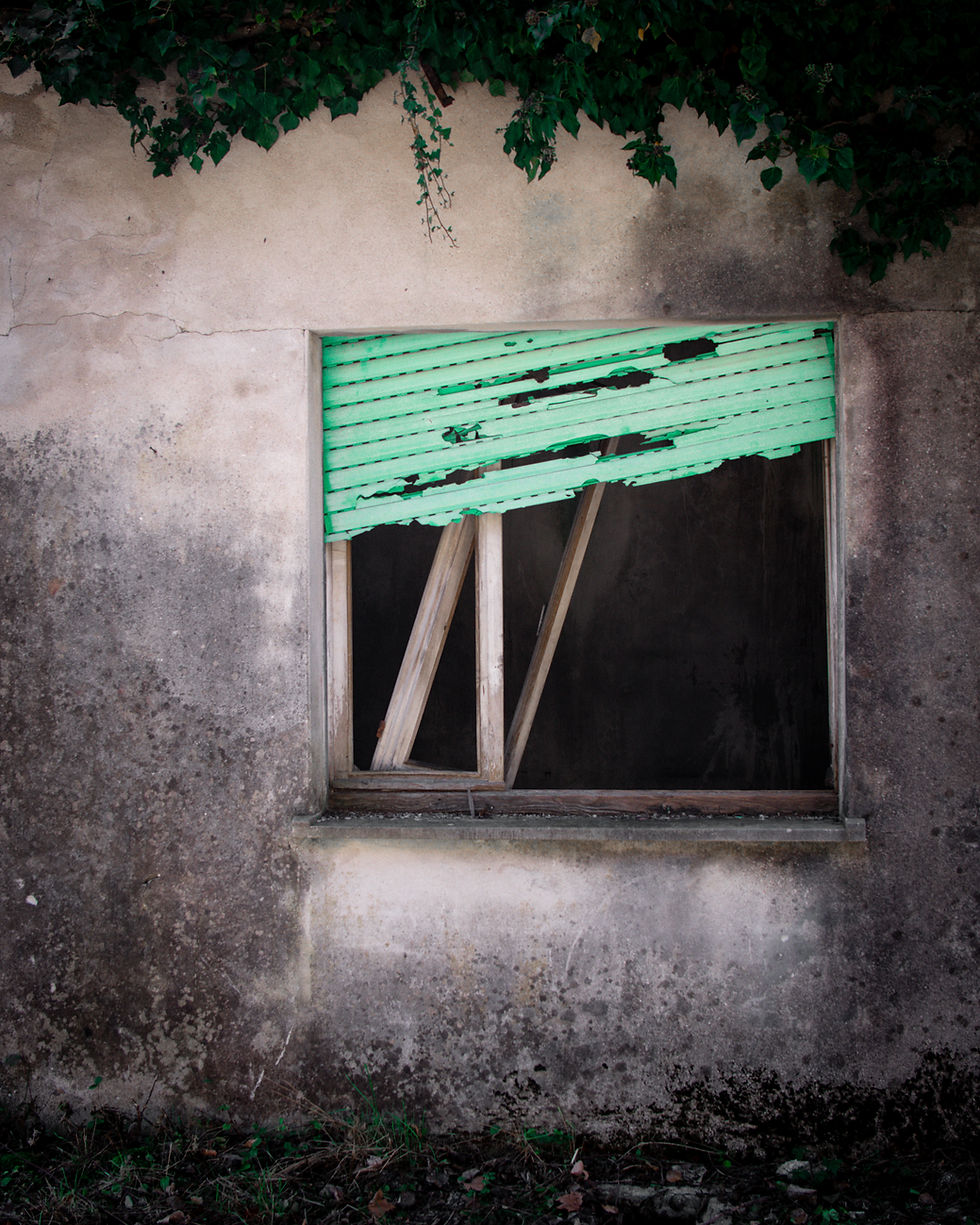
6. Photograph “boring” things on purpose
Sounds counterintuitive.
Why shoot boring subjects?
Because they force you to be creative.
A dramatic sunset almost always looks good. A grey wall doesn’t.
If you can make something ordinary interesting, you’ve understood:
Composition
Light
Perspective
It’s like training with extra weight.
Everything else becomes easier afterward.
7. Stop using gear as an excuse
Probably the most common mistake. And honestly, I still catch myself doing it sometimes.
“If I had a better camera, my images would be better.”
No.
Better gear = more possibilities, not better images.
If an image doesn’t work, it’s usually because of:
Bad light
Unclear subject
Weak composition
Not because your lens “isn’t good enough.”
Good equipment can make things easier. But it can’t replace understanding.
8. Edit with intention
For a long time, I edited every image the same way. More contrast, adjusted colors, some kind of “look” on top. Just because I thought I needed a consistent style.
At some point, I realized: everything looked the same. Everything felt the same.
Now I approach it differently.
I don’t ask: “How should this look (like me)?”
I ask: “How should this feel?”
Because that’s what editing controls.
You can create closeness or distance. You can make an image feel cold and detached — or warm and intimate.
Cool tones → calmer, more distant, sometimes harsher
Warm tones → closer, softer, more emotional
More contrast → tension
Less contrast → softness
Brightness → lightness
Reduced brightness → weight
Editing isn’t about making an image “prettier.”
It’s about reinforcing what’s already there.
Another misconception: that all images need the same look for consistency.
That’s not true.
If you force the same look onto every image, you remove what makes them unique.
Your style doesn’t come from everything looking the same.
It comes from how you see, choose, and interpret.
Editing isn’t a filter. It’s not a rescue tool.
It’s a translation.
You translate what you saw and felt into something others can perceive.
Or more precisely: it’s amplification.
You take what’s already in the image, and decide what becomes louder, and what becomes quieter.
9. Take breaks while editing (your eyes lie to you)
You only really understand this after falling into the trap once.
You sit there, edit an image, and think: “Yeah, this works.”
An hour later, you look again — and suddenly it’s too warm. Or too green. Or completely overdone.
That’s not imagination.
Your eyes adapt extremely quickly to colors and contrast.
The longer you stare at an image, the more “normal” it feels — no matter how wrong it actually is.
So take breaks.
Step away from the screen
Look outside
Come back after 10–15 minutes
That fresh look is often more honest than anything before.
If you want to be precise: edit an image, leave it, and decide later if it’s actually finished.
10. Make mistakes!
Mistakes have a bad reputation.
As if they’re something to avoid.
In reality, they’re the fastest way to learn.
When something works perfectly, you don’t question it.
But when something fails, something interesting happens:
You start thinking.
Why doesn’t this work? What exactly feels off? What needs to change?
That’s where learning happens.
More importantly: mistakes create problems. And problems require solutions.
Every time you try to solve one, you train real creativity.
Not random creativity — functional creativity.
You adapt. You rethink. You find new approaches.
Sometimes the most interesting images happen not despite mistakes, but because of them.
A “mistake” is often just something that doesn’t match your expectation.
And that’s where the potential is.
So stop avoiding mistakes. Almost seek them out.
They teach you more than any perfect image.
Ein „Fehler“ ist oft einfach nur etwas, das nicht dem entspricht, was du erwartet hast.
Und genau da liegt das Potenzial.
Also hör auf, Fehler zu vermeiden. Such sie dir fast schon bewusst.
Weil sie dir mehr beibringen als jedes perfekte Bild.
Conclusion
If you’re honest, in the beginning you don’t need:
A new camera
Presets
10 YouTube tutorials
You need:
Attention
Patience
The willingness to look at your own work critically
Most people stay average because they avoid exactly that.
If you do it differently, you’ll stand out automatically.
Not because you’re more talented, but because you’re more intentional.
And maybe the most important thing
In the beginning, your images won’t look the way you want them to.
That’s normal.
Actually, it’s a good sign.
It means your vision is already ahead of your ability.
That’s where growth happens.
So keep going.
Not perfect. But aware.
That’s more than enough for now.
Comments